
ATTENTION: To use this site, it is necessary to enable JavaScript in your browser.
Here are the Instructions on how to enable JavaScript in your web browser.

How Fractals Are Made

ETHERSIGHT ART How Fractal Art Is Made Simple rules of geometry are all you need to create fractals. But it takes special expertise to curate fractal worlds that are worth displaying on your wall.
01 What is a fractal? A fractal is a shape that repeats itself at every scale. Zoom in, and you find familiar patterns over and over - branches within branches, spirals within spirals, endlessly. This property is called self-similarity. It gives fractals a unique mathematical quality: they occupy space between whole dimensions, neither fully a line nor fully a surface, but somewhere in between. That in-between complexity is what makes them so visually captivating.
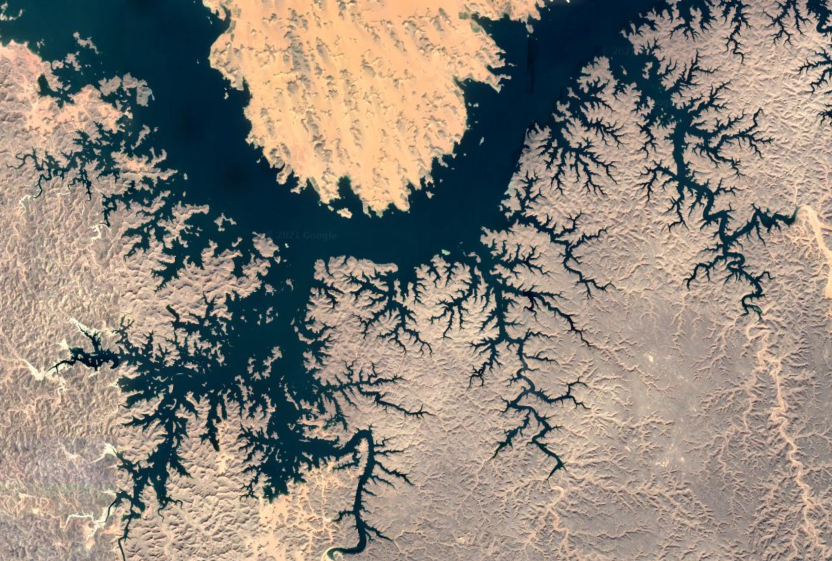
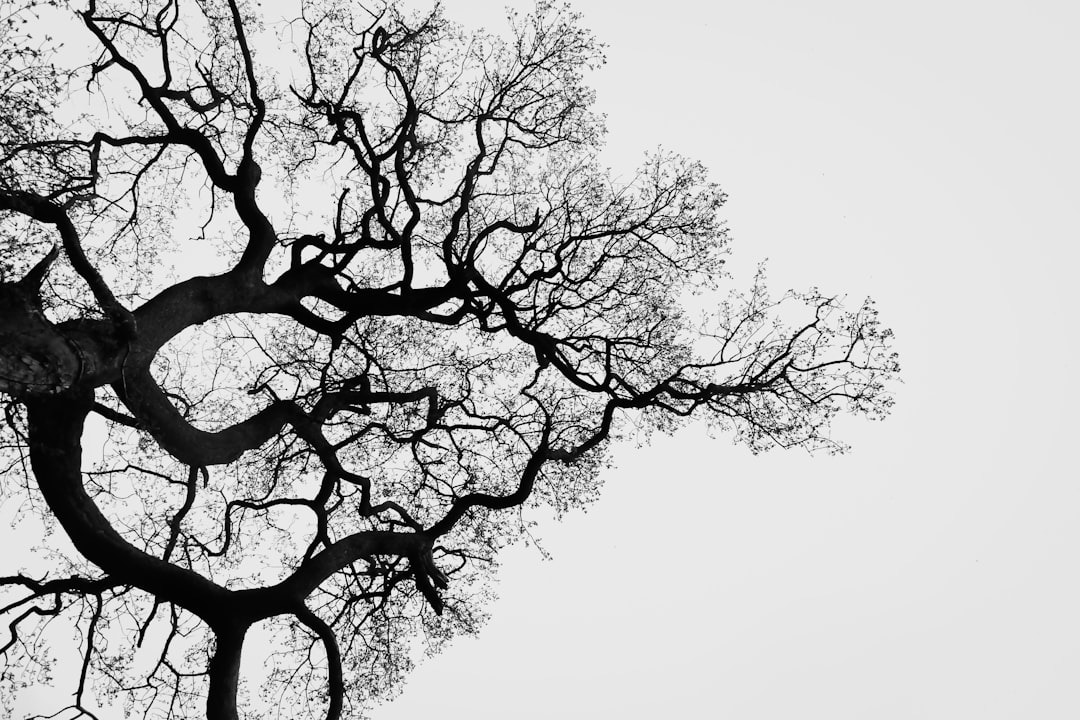
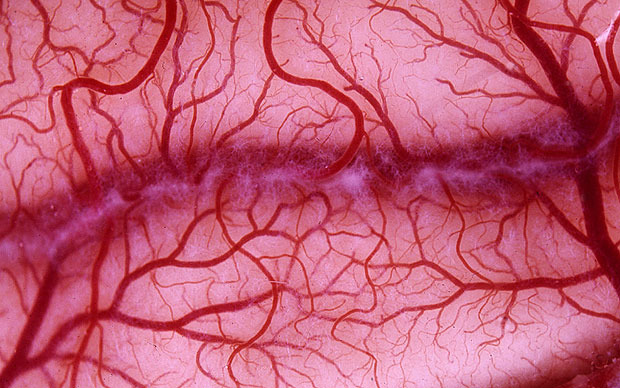
River delta viewed from space showing fractal branching patterns Tree branches revealing self-similar fractal patterns Vein network showing fractal branching at microscopic scale
Rivers Trees Veins
MACRO   MICRO
02 Why should I care about fractals? Look at the branching of a river delta from space. Then at the branches of a tree. Then at a network of capillaries under a microscope. Same pattern, three wildly different scales. Once you see self-similarity, you can't unsee it. This quality has inherent beauty, which is why viewing fractals is so therapeutic and mesmerizing.
03 How is fractal art created? Most digital fractal creation follows one principle: take an input and apply a set of simple rules to transform it into an output. Now treat the output as the new input, and repeat many times. This creates a feedback loop which leads to fractal shapes. The artistic part is choosing which geometric rules to use, how to incorporate color and texture, and which part of the fractal to ultimately frame. The artist navigates fractal spaces much like a photographer - choosing a subject, zooming in and out to perfectly balance the foreground and background, and then capturing a unique moment in time.
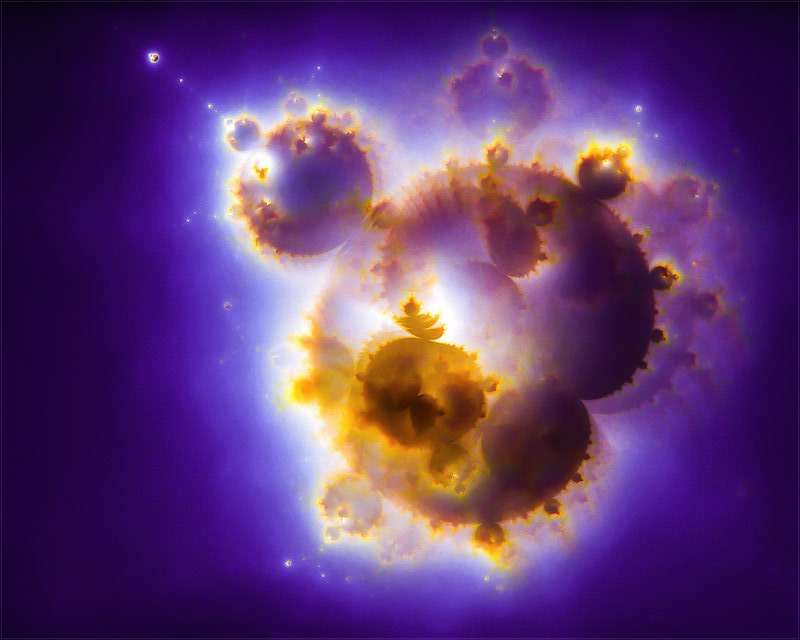
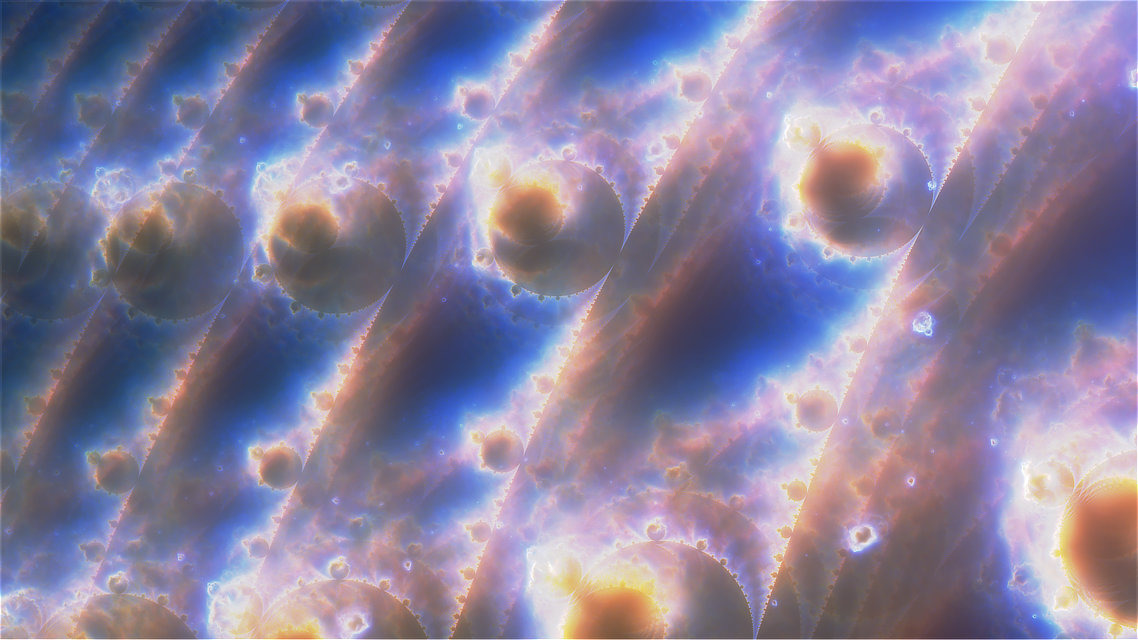
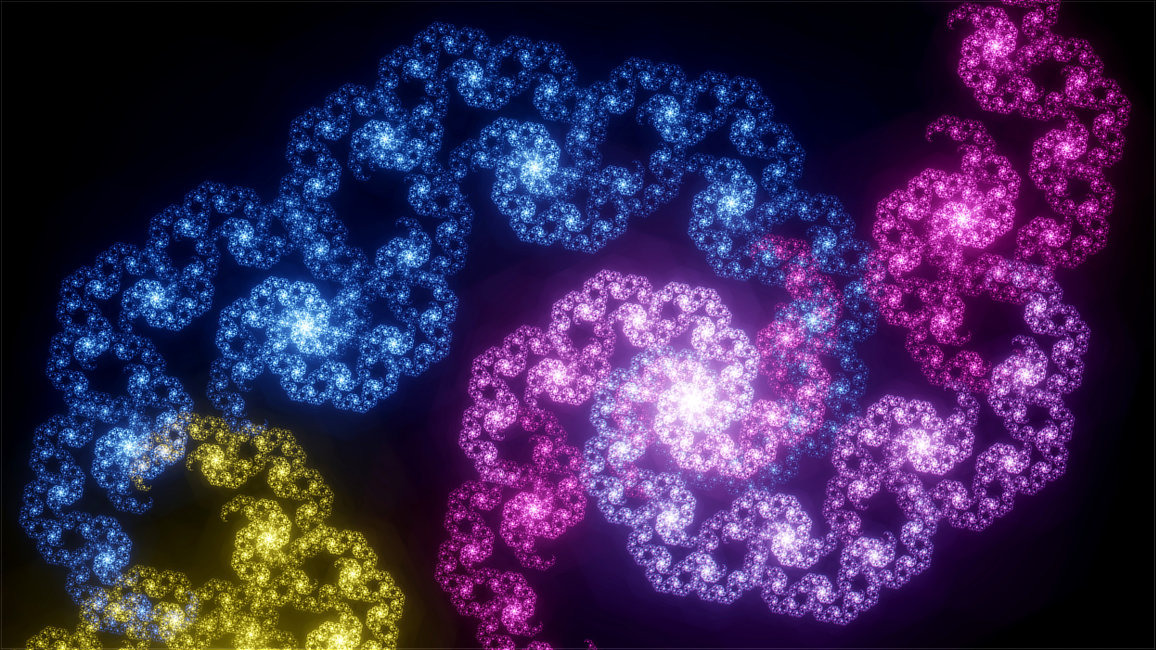
Fractal artwork rendered with custom-built software showing unique mathematical forms
04 What makes this fractal art different? Matt has spent thousands of hours exploring fractal spaces and coding fractal software over the last 11 years - all with artistic expression and visual quality in mind. Every piece for sale is hand-picked from a sea of countless renders accumulated over this time period. Images are rendered at a stunning 16K resolution, so that even the largest physical print shows crisp detail all the way down.
 
The Techniques Three families of fractal art — each with its own algorithm, aesthetic, and character. Click or swipe to explore examples from each.  
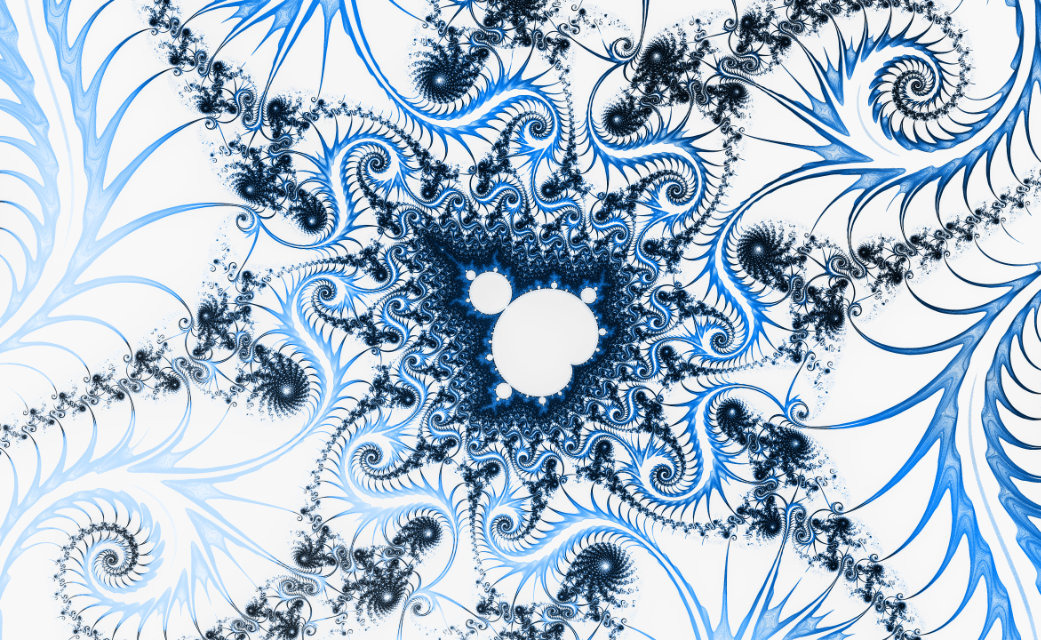
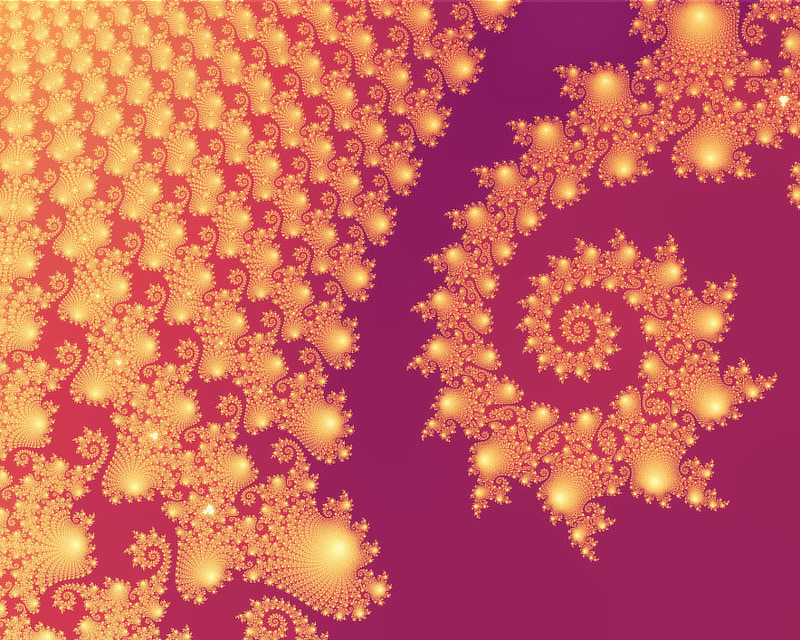
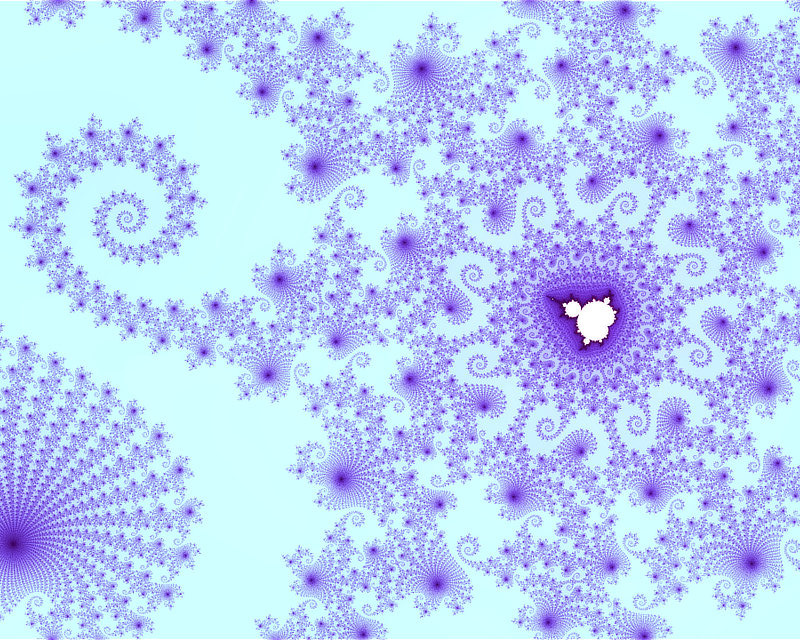
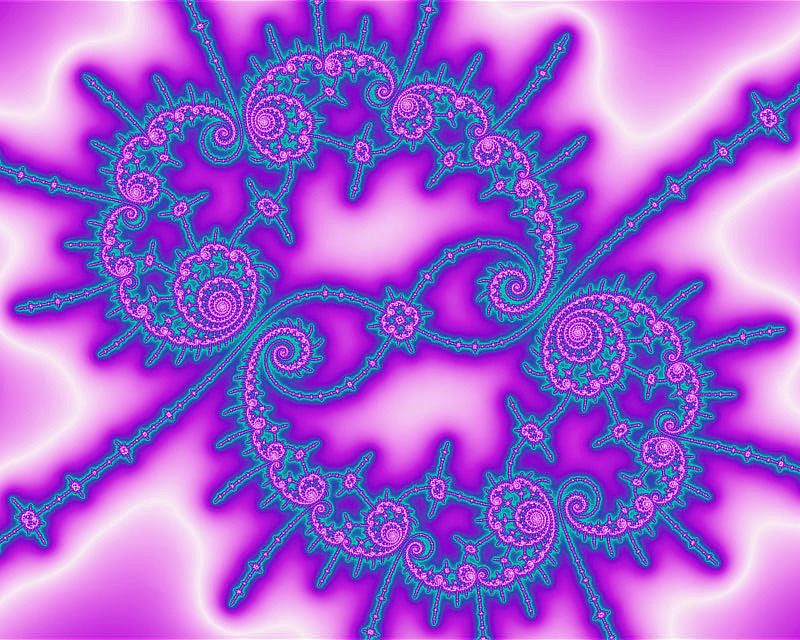
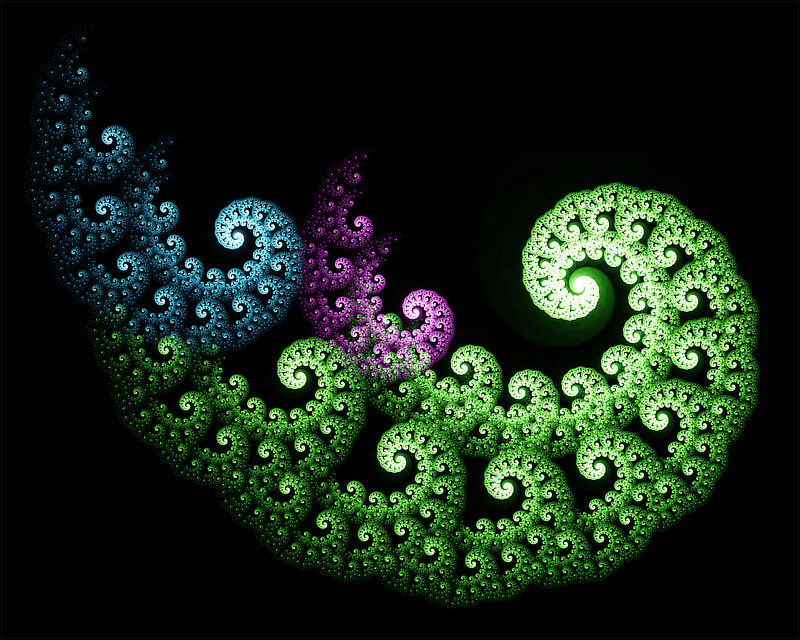
01 The Mandelbrot Set / Escape Time Fractals z = z² + c The most famous fractal, discovered by Benoit B. Mandelbrot at IBM in the 1980s. Zoom in on different areas and you will find twisted spirals, seahorse valleys, and infinitely recursive detail. You can zoom in forever without seeing the same exact pattern twice. By replacing the standard formula with custom equations in Fractal Eye's equation calculator, entirely new worlds emerge. Different equations unlock tree structures, crystalline lattices, and organic forms that don't exist anywhere in the classic Mandelbrot set.
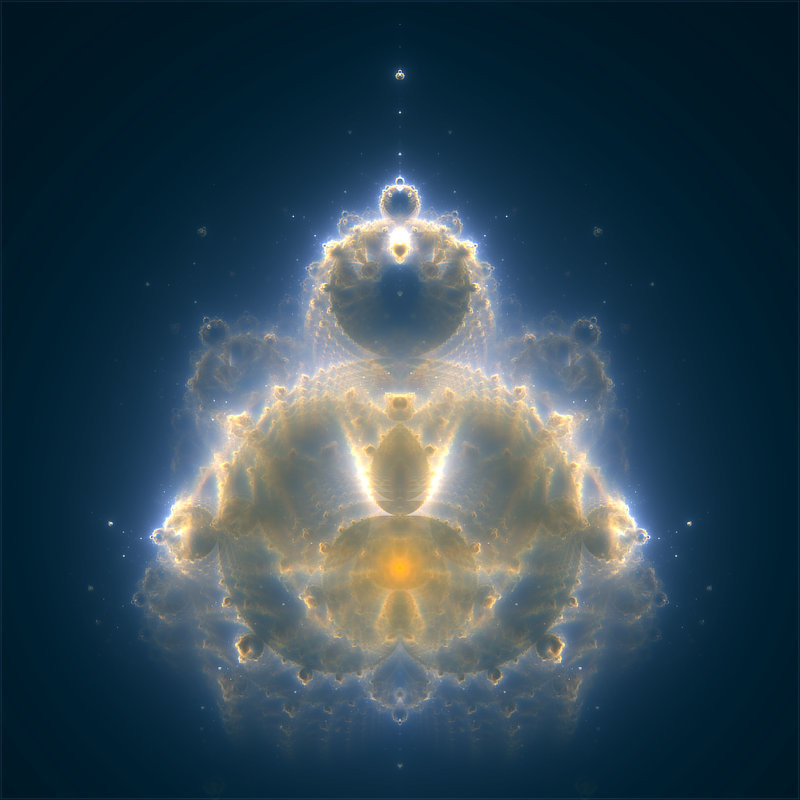
02 Buddhabrot / Nebulabrot Heatmap of orbits Same equation as the Mandelbrot set, completely different rendering philosophy. Instead of computing each pixel independently, this technique tracks where numbers land after every iteration and builds a heatmap of where all points spend the most time during their orbits. The result is an angelic image that reveals hidden structures invisible to traditional rendering. The Nebulabrot variant maps different iteration depths to red, green, and blue channels - producing the nebula-like quality. These fractals can technically be zoomed infinitely, but the computational cost grows exponentially with depth. Matt built a GPU-accelerated Nebulabrot explorer that you can use to find your own space fractals!
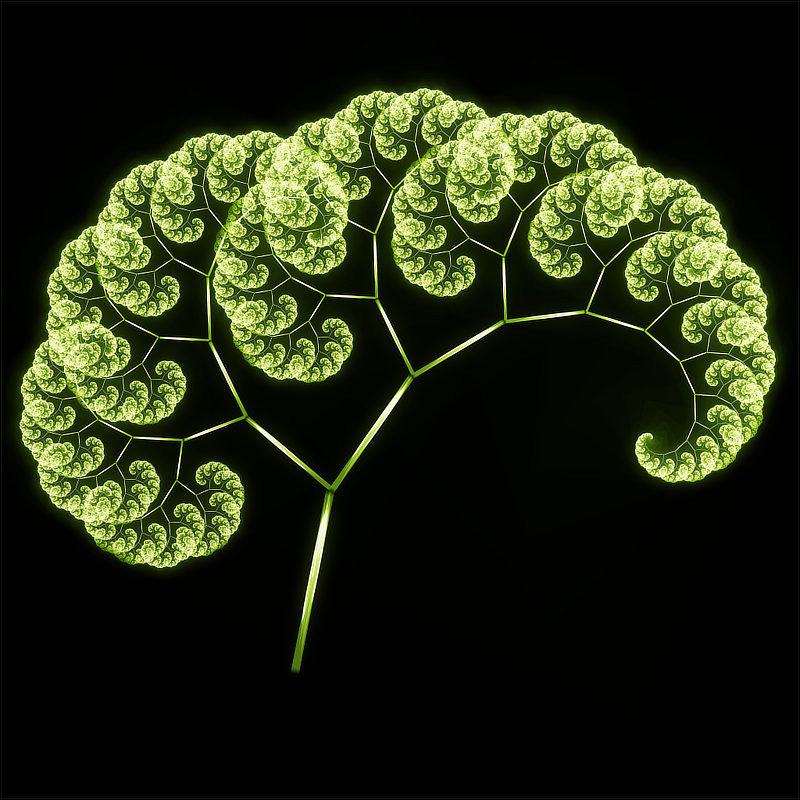
03 L-Systems Recursive grammar Lindenmayer systems are constructed by iteratively growing a sequence of symbols, and then interpreting those symbols as drawing instructions. Trees, ferns, lightning, coral - organic structures from nature are easily replicated with this technique because the underlying growth process is inherently fractal. Matt is currently building a tool that uses video feedback to create glowing L-system fractals - layering light and geometry until the image develops a life of its own. Check back here for future releases!
 
From Exploration to Print Every piece in the collection passed through this pipeline. Most of the work happens before anyone sees the result.  
  Explore Navigate fractal space. Adjust equations, parameters, zoom levels. Hours of searching for the right composition - the moment when the math produces something undeniably beautiful.
  Render Export at 16K resolution. At this level of detail, the structure at many different scales is expressed gracefully. Even standing directly next to the largest prints, clarity and precision is visible.
  Edit Create dozens of color and texture variations. Hours of refinement per piece, dialing in every attribute until the aesthetic serves the fractal's character.
  Curate Select only the absolute best from gigabytes worth of renders gathered over 11 years. Every piece in the collection is the peak of extensive exploration. Most renders never make it to the shop.
  Print Museum-quality substrates: stretched canvas, ChromaLuxe HD aluminum, natural maple wood. From small collectibles to full-wall statement pieces. The intended viewing experience for fractals is physical, at scale.
 
Why Physical Prints A fractal on a screen is a preview. A fractal on your wall is the experience it was made for. Self-similar patterns need resolution to communicate properly. On a monitor, you can only see so much of the detail. At 256 megapixels on a large-format print, the pattern continues all the way down - every branch, every spiral, rendered at full fidelity. “To truly appreciate their beauty, they must be brought into the real world, and at a large enough scale.”
 
Canvas Gallery-wrapped cotton-poly blend, soft matte finish, no glare under direct light.
 
Glossy Metal ChromaLuxe HD aluminum with mirror-finish surface. Colors appear backlit, almost luminous.
 
Wood Printed on natural maple. The grain shows through lighter areas, giving each print a warmth paper can't match.
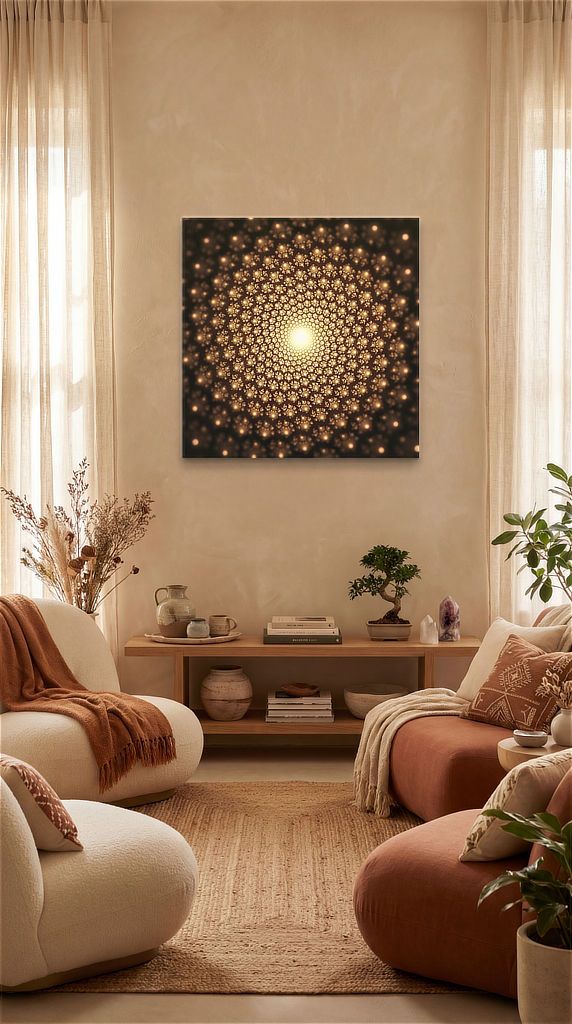
Large fractal art print displayed in a modern living room setting
See the Fractal Collection Curated from thousands of explorations over eleven years. EXPLORE FRACTALS
Trusted Art Seller

Trusted Art Seller

The presence of this badge signifies that this business has officially registered with the Art Storefronts Organization and has an established track record of selling art.

It also means that buyers can trust that they are buying from a legitimate business. Art sellers that conduct fraudulent activity or that receive numerous complaints from buyers will have this badge revoked. If you would like to file a complaint about this seller, please do so here.

Verified Secure Website with Safe Checkout

Verified Secure Website with Safe Checkout

This website provides a secure checkout with SSL encryption.

Cart

Your cart is currently empty.

Saved Successfully.

This is only visible to you because you are logged in and are authorized to manage this website. This message is not visible to other website visitors.

Import From Instagram

Click on any Image to continue

This Website Supports Augmented Reality to Live Preview Art

This means you can use the camera on your phone or tablet and superimpose any piece of art onto a wall inside of your home or business.

To use this feature, Just look for the "Live Preview AR" button when viewing any piece of art on this website!

Please fill out the form below if you would like to get in touch, and we'll get back to you shortly!

No thanks

SAVE 20% ON YOUR FIRST ORDER!

Enter your email below and we'll email you a 20% OFF Coupon right now!

This offer is valid for NEW CUSTOMERS only!

No thanks